A LIFETIME OF PUBLIC SERVICE, TO MY COUNTRY, MY STATE, AND NOW TO MY COUNTY.

Wednesday, September 5, 2012

Judge candidate's emails ruled legal


Judge candidate's emails ruled legal
Walt Wagner used Crook County's Listserv to distribute campaign material
By Joel Aschbrenner / The Bulletin

A candidate for Crook County judge was within his rights when he used a county Listserv last week to publicize his campaign Facebook page, a state election official said.
But a county official said the email put county employees who received it at risk of violating election rules.
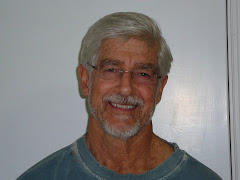
Walt Wagner, an Independent Party candidate challenging incumbent Mike McCabe, said he accidently included the county Listserv in an email blast promoting his new Facebook page. Distributing campaign material, Wagner said, is his constitutional right.
Assistant County Counsel Eric Blaine asked Wagner in an email to “cease and desist" sending campaign emails to the county Listserv.
The county uses the Listserv to send public meeting notices and news releases to employees and members of the public who request them.
Distributing campaign material through the Listserv puts county employees at risk of violating a campaign law that prohibits government employees from engaging in political activities, like visiting campaign websites, on the clock, Blaine said. 
But nothing prohibits Wagner from distributing campaign material to county employees or using the county Listserv to do so, said Andrea Cantu-Schomus, director of communications with the Oregon Secretary of State's Office. In fact, McCabe could use the county Listserv to publicize a website of his own if he wanted, she said.
Wagner said he viewed Blaine's request as an attempt to intimidate him from continuing to distribute campaign material. “When you start intimidating someone and it could affect their First Amendment rights ... that's wrong," Wagner said.
Wagner is a candidate for county judge, an administrative position and chair of the county court — a three-member governing body — with no judicial responsibilities.
Blaine said he was only trying preclude county employees from receiving campaign material at work.
“The county's only interest is to protect employees from violating campaign rules," Blaine said.
Wagner said that is not his problem.
“It's up to the county to make sure county employees are informed that when something comes in like that, they ... should either delete it or send it to their home email," he said.
In all, 126 people received Wagner's email. Several complained to the county about it, Blaine said.
The county is now looking to secure its Listserv from similar uses in the future, Blaine said.
The county had used a simple list of email addresses that any recipient could access by clicking “reply all," rather than using a blind carbon copy feature, which prevents recipients from seeing who else received the message.

Friday, August 3, 2012


It's official - I  filed as an Independent candidate for Crook County Court Judge in the general election, November 6,  with the Crook County Clerk's office on Thursday, August 2, 2012, at 12:47 p.m.  This was made possible because I secured the nomination of the Independent Party of Oregon.  The filing application, form SEL110, had to be signed and notarized by Independent Party officers and sent to the Crook County Clerk.  We think that this is the first time an Independent candidate has run for this position in Crook County.  


Thursday, July 19, 2012

The Independent Primary is completed now in Oregon as of July 17.   I've mailed my application to the Independent Party headquarters, which will send back a notarized original giving me the party nomination.  I will then file with Crook County.  This means that I will be on the November ballot as a candidate for Crook County Court Judge.

To support me with a contribution, mail checks to:
Crook County Citizens for Walt Wagner
7598 SW Stillman Rd., Powell Butte, OR 97753.

There is an Oregon Tax credit available, up to $50 per individual, or $100 per joint return.

Thank you so much for your support, and your vote this coming November!  WALT

Monday, December 21, 2009

SHOW ME A LEGISLATOR WITH GUTS!

The holidays are upon us, and despite our economic woes, for many if not most of us they will be filled with happiness, family, sharing - and driving. And it will be a great shame if the joys of the season are ruined by death or mutilation caused by someone driving under the influence of intoxicants: DUII.

Take the case of Ginger Davis of Canyonville, OR, who some years ago was the sole survivor of a two-car violent crash that claimed seven lives. Davis caused the deadly crash; she was dead drunk with a blood alcohol level of .23, way over the legal limit. Two of the victims were her own children. And this accident happened because nobody until then had taken the problem seriously enough to create a real deterrent.

Davis had a long history of alcohol problems, going back to high school. She had several previous drunk driving arrests, lost her license, but still continued to drive. Then one day in 1991 she was involved in an accident in Nevada. She left the scene, bought more liquor, and 24 hours later in Utah, she hit a car occupied by two Salt Lake physicians and their three children. Everyone in that car, plus the two children in Davis's car, were killed.

The judge's words, typical courtroom lip service, were harsh, but not his sentence. Five of the vehicular homicide charges were dropped in a plea-bargain "deal." It was as if five of the killed didn't even count. Davis received two sentences of from one to 15 years.

The Oregon legislature had NEVER proposed or passed a law to really protect the public from the deadly drunk driver. It's time to be realistic: people consume alcohol legally. Drunk driving is a topic people don't really want to think about. The voting public, and even the judges, often seem to take the attitude, "There, but for the grace of God, go I." Alcohol is a legal intoxicant, but driving impaired isn't legal, and it's deadly. And yes, it IS preventable. Ask those now spending their lives in wheelchairs how important this is.

The legislature started by allowing the police officer to draw blood to ascertain the amount of alcohol consumed. Then the breath testing machine was used. Both are all about evidence AFTER THE ARREST; they don't stop someone from driving. If you've lost a loved one to a drunk driver, or seen a dead body at the crash scene, experienced the screams, pain, horrible smells of blood and oil, seen all the broken glass on the highway - then it is real to you. Then you care, and you'll ask WHY this drunk was still out driving a car, when a REAL DETERRENT is possible.

Today we need to save money. We have a representative from Bend who wants to have police officers testify by phone at implied consent hearings, so they won't have to be paid for court time. But only a REAL DETERRENT will ultimately save money. When will the legislature become PROactive instead of REactive, start passing laws that will really prevent driving drunk, and save lives?

What am I talking about? What is a "real deterrent"?

The Oregon legislature has failed miserably for the past 60 plus years in this area. Nobody has had the GUTS to propose or pass a law that will make the drunk THINK before he gets into a car. The diversion program has some very good points, and if its classes on drinking an driving worked in every case, the recidivism rate for drunk driving wouldn't be so extremely high. And punishment for driving drunk has always been light.

If the legislature passed a law mandating a year in jail, no exceptions, for the second drunk driving offense, regardless of a previous diversion program, the certainty of a stiff sentence would finally make drinkers think before getting behind the wheel of a car. Conviction would cause hardship for their families, cost their jobs.

Jail space? No problem; after 6-8 months of this sentencing, word of mouth and a good media campaign would alert the drinking public that a designated driver is a necessity, because the alternative, a year in jail, would devastate their lives.

Let's see: who wouldn't benefit from this law? Emergency room doctors; florists; defense attorneys; physical therapists; tow truck operators, wheel chair manufacturers. The obituaries will be shorter lists. And the ACLU is sure to find something wrong with it.

Come on, legislators! Stop worrying about your next election, and pass a REAL DETERRENT to drunk driving! Let's save some Oregon lives, and set an example for the nation to follow.

Walt Wagner


Wednesday, April 29, 2009

WHAT WOULD WE DO?

Yesterday, my wife, Rebecca, was presented with a question: "Here we are...at the end of George W's reign...the country's economy is in shambles - America's world image is in shambles...what would be YOUR advice?"  I've asked her to write her response below, because I totally concur!  Walt. 

To begin with, I wouldn't blame Bush for the current economic shambles.  It started with Jimmy Carter, or even further back in FDR's failed socialistic policies after the Great Depression.  Ironically, it was the country's coming together in WWII that finally put paid to that era.  Under Reagan, we had some good entrepreneurial growth; the rich got richer, but the poor didn't get poorer.  To quote him, it was "morning in America."  Under Clinton, banks were forced to make bad loans, and Barney Franks and his ilk flourished.  Then Bush Two's  17 attempts to get more regulation were rejected by a democratic congress, and the foxes watching the henhouse, the SEC regulators who wanted the cushy multi-million dollar post-government advisory jobs awaiting them in the areas they were "regulating," failed miserably in the job they were assigned to do.  I do give Obama credit for attempting to put a time lapse between government regulatory jobs and private sector employment in the same field.  

You really want my advice?  I'd adopt Ron Paul's agenda.  More isolationism; pull back from the billions in foreign aid we can't afford; limit federal government spending to essential programs and promises only, i.e. national security, social security, medicare/medicaid.  Leave MUCH more decision making to individual states.  Curtail military operations except where our national security is compromised, but build up defensive capability, so that nobody can EVER detonate a nuclear bomb two miles over America's heartland where the electro-magnetic pulse would wipe out all communications, thus plunging this country into worse than 19th century conditions and total chaos.  This could happen SO easily; we have no "star wars" defense against rockets coming in; (WHY didn't we listen to Reagan!) and the rogue nations are building their rocket capability very fast.  They already have the nukes.

Economically, I'd make sure this country did NOT go down the road to socialism but remained a capitalistic country not dependent on foreign imports or oil.  I'd stop the bleed out of the country looking for cheap labor.  I'd develop the vast Bakken oil reserves in the Dakotas, supposedly greater than the Saudis';  AND I'd make electric cars the most affordable vehicle of the future.  I'd research a way to permanently neutralize nuclear waste material so that nuclear power would FINALLY really be "clean energy." 

In short, I'd work to make this country again the shining beacon that everybody wanted to enter, not just those fleeing poverty, suppression, and tyranny, but those seeking real opportunity and a place to bloom.  Starry-eyed idealism?  Probably.  But it happened before, and it can and should happen again.   
Rebecca Wagner

Monday, April 27, 2009

BEND RATED NUMBER FOUR IN THE NATION

In the May, 2009, issue of Newsmax magazine is an article titled, "Uniquely American, the 25 Cities and Towns that Best Express Our National Values."  We were pleased to see that Bend is ranked number four out of the 25, and for the benefit of those who don't subscribe to Newsmax, quoted below is the text from that article.

"Bend is a great example of a community that set a goal - to make the town a national tourist destination - and succeeded.

The city ranked third on the 2008 "Best Performing Cities" (small metro) list, according the   Milken Institute, a California-based think tank that tracks this list annually based on wage and salary growth, job growth, and high-tech sector growth.  Much of the credit goes to residents' efforts to grow from a regional destination to a national one in just five years. 

A large chunk of its tourism revenue flows from the nearby Cascade Range, where features include the Mount Bachelor ski resort, Cascades Lake, and the Deschutes River.

From 2003 to 2007, room-tax collections in Bend grew more than 55 percent.  Three million people a year visit Bend, and 61 percent of those participate in outdoor activities.  The tourism industry pumps an estimated $300 million annually into the local economy and employs nearly 16 percent of the Deschutes County work force.  Trade, transportation, and utilities beat it out only slightly.

Bend has the highest average number of sunny days in the state, so it's not surprising that it's also quickly becoming a prime retiree destination.  Apart from is high desert climate, retirees, locals, and tourists alike gravitate to Bend for its cultural offerings, great dining and nightlife, excellent healthcare, and small-town feel." 

On a 1 to 10 scale, 10 being the highest, Bend was rated as follows:

Hospitality  8
Wholesomeness  9
Family Friendliness  8
Devotion to Religion  6
Culture  8
Community Activities  7
Scenic Beauty  10
Education  6

It's gratifying to see the area where we chose to live appreciated in the national media.  


Sunday, July 20, 2008

MeadowLakes Down

Mention to anyone the recent trapping and killing of a family of beavers, at least four, at the MeadowLakes Public Golf Course, and the almost universal reaction is "Awwwww!  No!" 

The title above refers to Richard Adams' book, Watership Down, standard high school English fare, written from the rabbits' point of view.  For everyone familiar with that book, the problem of the human animal as greatest predator and destroyer of habitat is magically, some say allegorically, illuminated.

I (Rebecca) wanted to write this from the the beavers' point of view, but not knowing exactly how they were killed, I can't quite get into their heads.  Yet.   Walt is still looking into it, because according to an authoritative web site on beavers, http://www.beaversww.org/beaver.html, "Snares hold the victim helpless against predators and can cause death by strangulation, or drowning due to entanglement.  No kill trap that currently exists will reliably cause an instant death under field conditions, and drowning traps are especially inhumane for animals that can hold their breath for 10 to 15 minutes..."  Not a pretty picture, is it! 

Relocation traps like the Hancock or Bailey live traps are a humane method of trapping; the beavers could then be relocated as far away as necessary to keep them from returning.

City officials tried to keep the killing hush-hush, indicating that they knew people would not approve, would be upset.  So why was this done?  The busy beavers took down three trees.  Less trees, less hazard for the golfers, right?  What's the big deal? 

Well, I suppose the beavers could have taken down more trees and flooded the waterways with their house/dams.  And although there are many ways to co-exist with the beavers and their works, including running wide pipe through the dams to ensure continued water flow, fencing, tree protectors, repellents, or relocation, (Google "beavers" for a wealth of information!) city government chose to kill them instead.  

The excuses were many, such as, "They'll come back if we try to relocate them."  Really?  Where did they come from, then?  

The reality is that when they are two years old, young beavers strike out to find their own territory.  Beavers can live up to 20 years, and reach a size of up to 65 pounds.  They mate for life and start reproducing then they are three.  If a mate is killed the survivor will mate again, but because they breed only once a year, beavers rarely overpopulate.  They will even decrease their rate of reproduction when occupancy reaches a certain level.  

In 1969, the Oregon State Legislature voted to make the beaver the Oregon State Animal.  This was done after extensive transplanting efforts resulted in renewed healthy beaver populations over much of the state, the beaver having been nearly eliminated in the mid  1800's by fur trappers.  

Oregon is now called The Beaver State.  We're proud of our beavers, the animals and the sports teams named after them.  And while "harvesting" is allowed under ODFW permits, to kill the state animal unnecessarily seems simply wrong.  Certain people made some bad decisions here.  

We welcome your comments.  Walt and Rebecca Wagner


Wednesday, June 4, 2008

RESORTS OR NO RESORTS: THAT IS THE QUESTION

The front page of the Tuesday, June 3, Bend Bulletin featured a very interesting article from the New York Times News Service.  It provided an almost eerie look into the possible future of Crook County's Powell Butte area if resorts are allowed to proliferate beyond the area's ability to sustain them.  The article described Murcia, Spain, and deserves a good look from our planning commission.

Murcia, Spain, is a desert area very similar in topography to our Central Oregon landscape, the photo on the bottom of the page showing a cone-shaped mountain and sparse vegetation.  Good land farmed for generations has given way to a plethora of golf courses and elegant vacation homes, in a "resort-building boom."  The result:  Murcia is running out of water.  The Spanish Environmental Ministry blames this on a combination of "global warming and poor land use." But it's more than just bad decisions: some local officials are now in prison for taking bribes that allowed construction on land with insufficient water.

The greener pastures of Central Oregon are turning from farm land into resorts and golf courses at an alarming rate.  The old farming and ranching way of life is losing out to more and more five or ten acre plots as agriculture becomes increasingly more difficult to keep economically viable, and farmers and ranchers are tempted by the money that can be made from selling to developers.

It would behoove Crook County to take a lesson from our sister climate in Spain.  Avion Water, which is supplying water to Brasada Ranch, and which will likely attempt to provide water for the two other approved resorts, is rumored to have already had seven dry wells.  (It's also rumored that the record of these dry wells has somehow become lost.)  Golf courses take a tremendous amount of water, and what Avion takes out of the ground can't help but deplete the area's aquifer.   (It should be noted here that Prineville's excellent public Meadowlakes Golf Course is a wastewater treatment facility that has won Golf Digest's National Environmental Leaders award.) 

Our previously approved resorts are nowhere near capacity; some are just in the planning stages with no impact yet on our water supply.  I have to agree with the overwhelming majority of voters in Crook County, and say that we should approve more resorts only after we have seen the impact of our planned resorts at full or nearly full capacity.  

Are the resorts we have already approved good for Crook County?  Yes, because they are and will be a valuable asset to our economy, but new ones should be considered only after we have conducted real, unbiased planning and research into habitat, water, traffic, and any other area having an impact on our infrastructure.  The voters have spoken loudly; these same voters will be watching the actions of our county court and planning commission.  Government too often forgets that its purpose is to do the will of the people, not the other way around.

Keep visiting this blog for up to date information on issues in Crook County.  A link is coming soon on the Central Oregonian's Calendar page.   Walt and Rebecca Wagner